For multiplayer, choose a build that can work with the current season's decree pool. A protected Wizard supported by Library and useful enchantments is one conditional route; a Demon Altar with expendable troops is another. Establish the damage core and its defense first, then select available decrees that improve that working system.
This guide uses version 0.9.8, Patch #31. Multiplayer now rotates decrees each season: the pool includes eighteen universal decrees, six rainbow decrees, and six for each king. Check the bottom-left lobby panel before following a build that depends on a specific decree. Older extreme builds and pre-patch exploits are not reliable current loadouts.
Inspect the season before committing a build
Open the current pool in the multiplayer lobby, in the same area used to review seasonal rainbow cards. Identify which of your intended support and scaling effects are actually available. Do this before treating a particular late-game reward as essential.
The pool creates a difference between a possible combination and a usable plan for this season. A build requiring a missing decree needs another route, even if every card in the combination exists. You can preserve the core and replace the payoff, or choose another engine entirely.
| Check | What to identify | Consequence for the build |
|---|---|---|
| Decree pool | Available universal, rainbow and king effects | Determines which planned payoffs can appear |
| Rainbow cards | Current special card options | Determines whether a rare support route is plausible |
| Opening cards | Usable troop, damage and protection | Determines the army you can field now |
| Opponent behavior | What damages or bypasses your core | Determines the next repair |
Do not interpret a seasonal option as a guaranteed draw. Availability removes one barrier; you still need a working opening and a reward path that supplies the pieces. Keep alternatives that solve the same job when the exact card does not appear.
Build against complete armies rather than one target
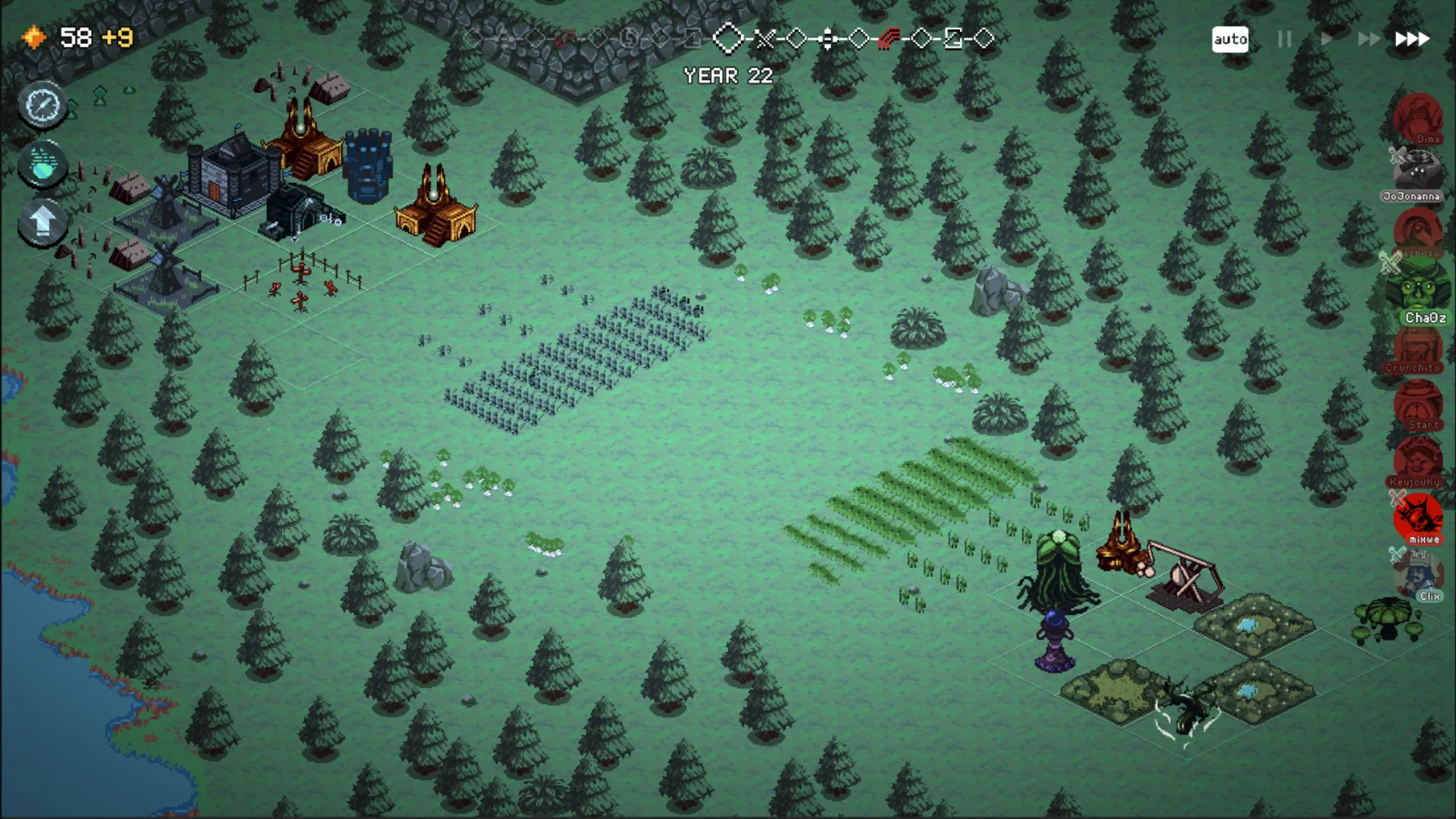
Compare the army on the battlefield with the support plots behind it.
Asynchronous multiplayer matches you against stored runs from other players. You have time to consider decisions between battles, but the enemy army still presents a complete set of interactions. A large damage number on one troop does not show whether it survives, reaches useful targets, or handles the opposing troop count.
Evaluate three jobs: damage, protection, and growth. Damage defeats the enemy. Protection keeps that damage source active. Growth provides enough improvement for later fights. If one job is missing, adding another multiplier to a different job may leave the build unsafe.
For a Wizard route, the valuable troop needs opportunities to attack and a protection plan. For an Altar route, expendable troops need to occupy enemies while Demons develop and contribute. For a tower route, the screen must buy repeated attacks.
Ranked opponents can have highly developed combinations. A spectacular loss is not enough evidence to classify the opponent as cheating or to identify the whole build from one effect. Use the post-game kingdom review to inspect what actually existed on the board.
Use a Wizard core when the pieces are available
Wizard provides a ranged damage starting point. Library can develop enchantments on adjacent troops. Static adds chained damage, Combustion provides a kill-linked area effect, and Steel Coat provides protection against incoming damage. This creates a coherent conditional core: a troop that deals damage, effects that help it reach multiple enemies, and protection that keeps it contributing.
The pieces do not guarantee a board wipe. Your Wizard must survive long enough to attack, its effects must trigger against suitable targets, and the relevant support has to be connected. An enemy that removes the troop immediately can interrupt the entire plan.
Arcane now gives Wizards additional damage per enchantment they bear. That is a current perk interaction, not a reason to assume every Wizard automatically receives all the bonuses described in an old video. Read your equipped perk effects and troop preview.
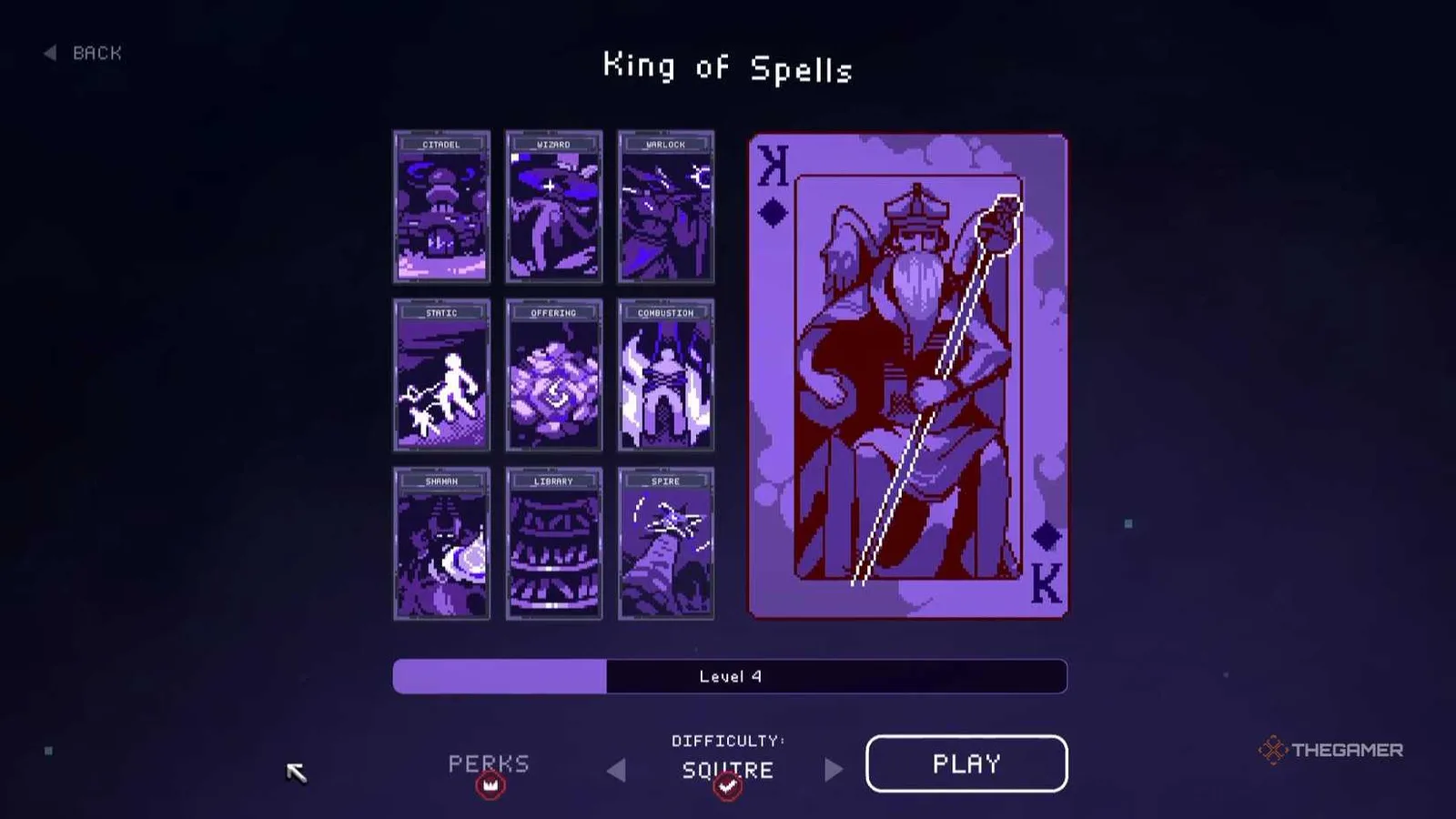
Identify the card names and artwork here; use their current previews for effects.
Build the smallest working version first. A Wizard with protection and one useful offensive effect is easier to stabilize than a board that reserves several Library locations while the opening troop remains weak. Add more enchantment development when the first core survives.
Place Library beside the recipient that matters
Library uses adjacency. Its relevant recipient must be connected in the cardinal directions, rather than merely appearing close on the grid. Inspect the neighboring plots before placing a temporary troop that would receive support intended for your principal attacker.
The effect also depends on the enchantments present. Avoid adding arbitrary enchantments just to make the interface look stronger. A collection of effects with no useful contribution can distract from the specific protection and damage tools the army needs.
Library is an investment in future development. If your troop is currently too fragile to survive the next battle, immediate protection or a duplicate can be more important. If it already works, support that develops its effects becomes easier to justify.
Patch #31 fixed a broken Surge and Library interaction. Do not base the multiplayer plan on an older demonstration whose result depended on that behavior. Surge still has a defined support activation effect, but the current interaction must be used as implemented rather than as a preserved exploit.
Handle enemy screens and protective layers
Large troop populations require an attack pattern that reaches enough enemies. A single-target attacker can spend too long clearing disposable troops while the enemy carry remains active. Chained and area effects can help, but they need the right trigger and a surviving recipient.
Static and Combustion solve different jobs. Static adds a chain effect to attacks; Combustion depends on kills for its area contribution. If the troop cannot secure its initial kills, a kill-triggered effect may not rescue the opening by itself.
Steel Coat changes how an incoming attack affects the recipient. Treat protection as part of the enemy build as well as your own. An attacker that relies on a single decisive hit may face a different problem from one with repeated or chained damage.
Do not conclude that one named enchantment counters every swarm or defensive setup. Observe which enemies survive and why. A protected carry, a high-population screen, and an attacker capable of bypassing the frontline present different demands on your army.
Keep an Altar route as a distinct alternative
When your opening or season supports Blood more naturally, use Demon Altar with expendable troops rather than forcing the Wizard route. Imps create a screen, allied deaths improve the Altar system, and Cemetery adds summons and current destruction interactions.
The current version matters here. Pagoda summons Ghosts, Cemetery summons Skeletons, and Oblation rewards pit use with unit growth. Mangler now summons meat trolls and gains health when destroying units under Patch #31. Older descriptions of Vampirism or a direct-damage Mangler tower should not determine the loadout.
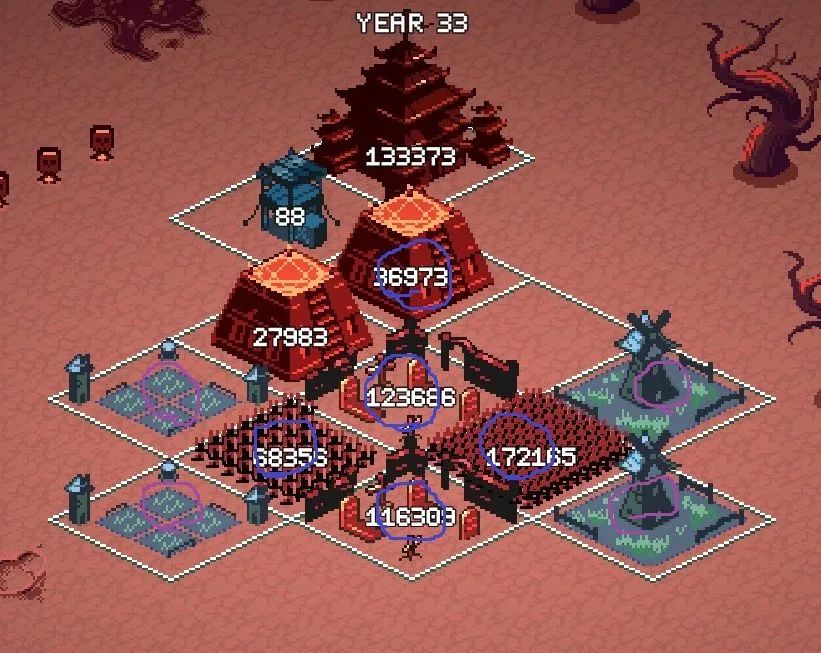
Layout reference only; use current card previews for stats and effects.
The Altar route still needs protection for its valuable summons. Too many weak units can die together and leave the Demons exposed. Add immediate damage or better screening when the engine has not yet developed, rather than assuming that more future deaths solve every encounter.
Choose one engine as the main commitment. A complete Altar system plus a complete Library system can demand more space and cards than the run provides. Borrow a useful defensive or offensive piece without automatically building another full army around it.
Spend on the next necessary improvement
Multiplayer rewards planning, but planning should not become an endless search for one perfect final board. Before a reroll or purchase, define the problem and several acceptable improvements. A frontline duplicate, carry protection, or a connected support card can all be valid answers to the same unstable opening.
Do not discard a useful reward merely because it differs from the ideal deck. If it keeps the damage source alive, it may create the time needed to find the preferred support later. Conversely, a rare card with no useful recipient can be less valuable than an ordinary card that immediately contributes.
Gold has a special tradeoff in Mercenary builds because spending changes troop population. If you borrow Mercenary as a screen, check its count after shopping. An upgrade purchased for the carry should not quietly remove the army that protects it.
Patch #30 fixed extra gold from purchases with a full hand and unintended multiple rewards from loot. The current plan should remain functional without those behaviors. Ordinary purchases and legal growth are enough to define a coherent build, even when they do not reproduce an old extreme screenshot.
Review enemy kingdoms after the run
Patch #31 adds post-game kingdom review for multiplayer enemies and your own build. Use it to identify the actual recipients, support connections, and major pieces behind an outcome that happened too quickly to understand during combat.
Look for the damage source first, then the protection and growth around it. A board can contain a dramatic effect that is secondary to the real engine. Identifying the complete relationship is more useful than copying the first distinctive card you notice.
Compare the opponent's board to your own failure. If your Wizard died immediately, look for the attack that reached it and the protection it lacked. If your army lived but failed to clear the screen, examine damage distribution. If the build became weak only later, review its growth investments and reward decisions.
Top-player ranking statistics can add context, but they are not a current win-rate proof for your chosen loadout. The game now exposes core gameplay stats through ranking icons; use them as clues to investigate rather than a substitute for understanding the board.
Keep the build valid as the season changes
A reusable multiplayer plan specifies jobs rather than demanding the same decree forever. Keep a protected carry, enough screening, and a growth mechanism that fits the current options. Replace absent seasonal payoffs with a supported alternative or change the engine.
Start a new run after updating. Stored run data can retain older behavior, and Patch #31 explicitly calls for fresh runs to receive its changes. Evaluate the build under the current rules before drawing conclusions from an old save.
The practical cycle is to inspect the pool, assemble a working opening, observe which interaction fails, and repair that interaction with the next available card. Post-game review then gives you a concrete adjustment for the following run.