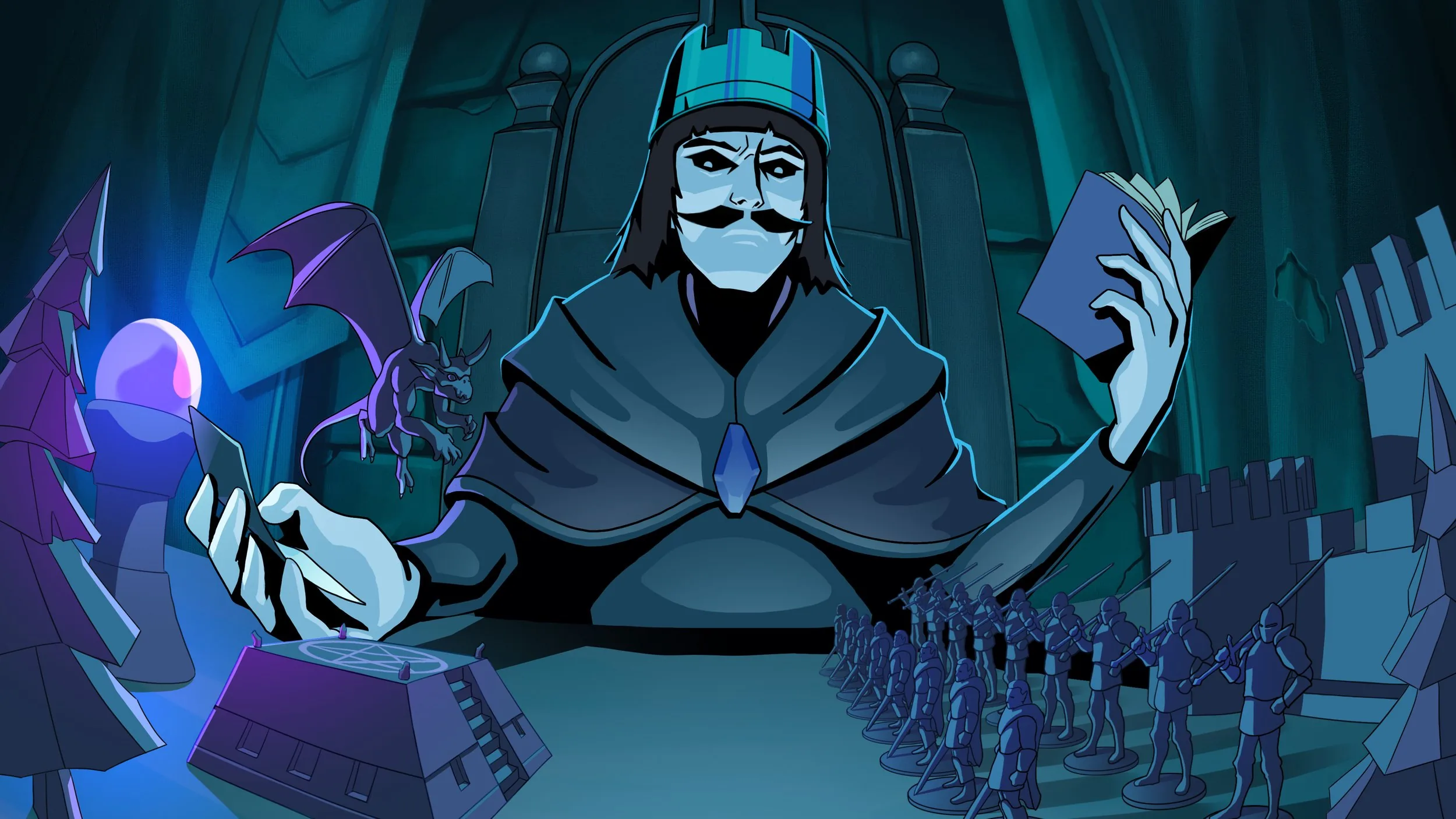
9 Kings multiplayer is asynchronous PvP: you build your kingdom at your own pace and fight saved kingdoms created by other players. A run puts your kingdom against eight rivals, with the aim of surviving longer than the others. It is available in the current Early Access game. You do not need to wait for the November 12, 2026 release of version 1.0.
The essential preparation is to unlock the mode, inspect the current season's available cards and decrees, and assemble a kingdom that works with those options. This guide explains that process for version 0.9.8, Patch #31. It covers the mode's rules and interface, rather than promising a particular build will win every match.
Understand asynchronous opponents
The enemy kingdom comes from another player's saved run. You are fighting the army and kingdom that player created, rather than exchanging live turns with someone watching the same match. The developer has explicitly described these opponents as real player snapshots, filtered by rank, rather than generated bot builds.
This distinction changes what you can control. You can take time to inspect a card, reconsider a placement, or plan several effects before continuing. An opponent does not pause their own live game while you make that decision. Conversely, you cannot assume the opponent is reacting to your current choices or manually aiming attacks at the same moment that you are.
A saved kingdom can contain the consequences of its original run. If its player previously lost a life and gained cards through a related perk, those cards and their consequences can be part of the saved state you face. Do not interpret a powerful army as evidence that the enemy has just drawn a card in response to your action.
The useful question during a fight is therefore concrete: what does this kingdom do to yours? Identify its damage sources, what keeps its army alive, and which support plots create its growth. These are actionable observations. Guessing what another player is currently thinking cannot help you solve an asynchronous battle.
Unlock and enter the mode
The multiplayer launch set the unlock requirement at playing the base game nine times. The requirement counts played games rather than demanding nine victories. If the mode remains locked, check its displayed requirement and your recorded progress before starting another run specifically to unlock it.
Use those early singleplayer games to learn card placement and the event calendar. You should be able to distinguish a troop from a tower, recognize a support building's targets, and understand the cost of destroying a developed plot. Multiplayer introduces different pressure, but those operations still determine whether your kingdom functions.
Before entering, check that the game has updated and begin a fresh run. Patch #31 instructs players to start a new run because an existing saved run does not store the updated run data. Loading an old kingdom immediately after updating can produce misleading results when you are trying to judge a changed card or interaction.
Casual play is available alongside the competitive experience. It provides a useful place to learn how player kingdoms behave without treating each attempt as a commitment to climb the ladder. A casual result still depends on the cards and kingdom you build; the mode label does not remove the need to prepare.
Check the season before choosing a plan
Open the seasonal pool screen in the bottom-left corner of the multiplayer lobby. This is where you can inspect the season's rainbow cards and, from Patch #31 onward, its decree pool. Do this before committing to a strategy that needs a specific rainbow card or decree.
The multiplayer decree pool rotates each season. Patch #31 defines the pool as 18 universal decrees, six rainbow decrees, and six decrees for each king. Those are the contents of the seasonal selection pool, not a promise that every Council will offer every decree or that a particular option will appear on demand.
A combination may remain mechanically sensible while being unavailable in the current season. For example, a plan that relies on a special support building cannot be evaluated solely from a screenshot of an older successful kingdom. First establish that the card is in the current pool, then consider whether your starting deck can function until it appears.
Use a short preparation list:
- Identify the regular cards that supply your opening defense.
- Check whether any required rainbow card appears in the seasonal pool.
- Check the decrees that materially enable the plan.
- Choose an alternative if the key option is unavailable.
- Read the equipped perks before launching the run.
Expect a different opening from singleplayer
The multiplayer launch introduced five starting cards, a base with HP, and an opening protection period in which early losses do not remove lives. These rules make the early board different from a standard singleplayer opening. Read the current mode display, especially if a perk changes protection.
Vigilant now provides two additional years of protection. That makes the protection period a variable associated with your loadout rather than something you should memorize as an unchangeable universal rule. Use the displayed protection to understand when survival starts carrying a direct life cost.
Protection is an opportunity to establish a functioning board. It is not a reason to ignore the enemy or invest every card in a late payoff. A support engine with no troop or tower capable of fighting can still leave you poorly positioned when the protected period ends.
Your base also matters as a combat target. Keep its HP and function in mind when comparing a kingdom that relies on troops with one that relies on structures. A singleplayer habit of concentrating exclusively on army numbers can hide the point at which the base becomes vulnerable.
Diplomacy follows the multiplayer elimination structure: the launch description ties it to a king dying. Avoid using a singleplayer event timetable as an exact schedule for multiplayer. Check the available choice when it occurs and consider both the opponent you remove and the cards associated with that opponent.
Read a battle for useful evidence
Observe the sequence of failure before changing your kingdom. If your frontline disappears immediately, adding more damage to a ranged attacker may not give it time to fire. If enemies survive after your frontline holds for a long period, the same kingdom may need better damage rather than another defensive layer.
Watch which units actually reach their targets. A large statistic does little if the unit dies before contributing. Similarly, a slow tower may need time and protection to apply its attacks. You should interpret HP, attack speed, targeting, summons, and support effects together instead of reading one headline value.
The current patch improves several pieces that affect this reading. Trapper damage has increased, and its traps already stun enemies after the Patch #30 rework. Trebuchet damage has also increased. Mangler gains HP when destroying units. These changes do not establish a universal ranking, but they mean that an older dismissal of these cards may describe different behavior.
Do not copy an exploit explanation as a competitive plan. Patch #30 removed glitches involving extra loot cards, bonus gold from buying with a full hand, and unintended Vault leveling interactions. A strategy that depends on one of those glitches has lost the premise on which its old result was built.
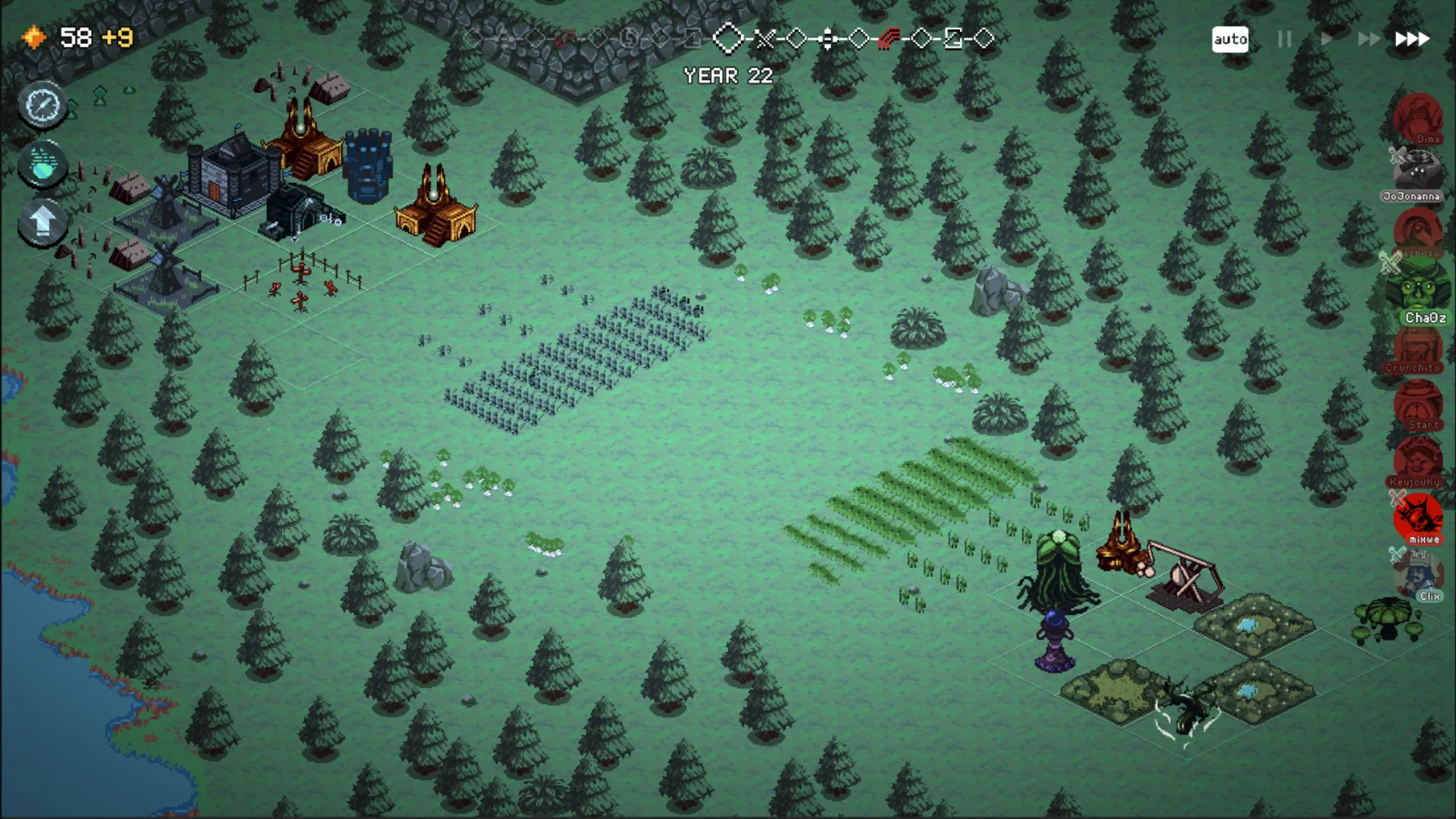
Asynchronous battles use kingdoms built by other players.
Use perks for a defined opening
A perk loadout should tell you what kind of board you intend to assemble. Starting cards can make a particular opening easier to create, while regular stat effects strengthen eligible units. Rainbow perks alter how the loadout's effects apply, so their placement and target restrictions need attention.
Patch #30 changed multiple perks substantially. Brutal gives all your troops an initial Adrenaline stack, rather than only affecting the first troop. Arcane rewards Wizards for enchantments, while Sorcerous rewards Warlocks for Tomes used. Moderate fixes universal perks at twice their normal application, and Authoritarian fixes the top-left regular perk at three applications.
These are different mechanisms. Do not assume that stacking several multiplier perks necessarily pushes a fixed effect above its stated value. Read the effective perk description before starting, then ensure that the regular perk being increased actually affects the cards in your plan.
Save loadouts with a specific purpose. The game supports three perk loadouts for each king. An opening focused on reliable defense and a loadout built around a particular growth engine can then remain separate. When you change one, you can review the choice deliberately instead of forgetting which perk you moved.
Review kingdoms after the run
Patch #31 adds post-game kingdom review. After completing a multiplayer run, you can inspect enemy kingdoms and your own kingdom. Use this to replace vague impressions with a map of the plots and effects that produced the result.
Start with your own failure. Find the troop or tower intended to carry the run, then identify its supporting plots. Check whether those supports reached it, whether its important enchantments accumulated, and whether another card consumed the space or resources the plan needed.
Next inspect an opponent that survived longer. Compare roles rather than copying every plot: its frontline, primary damage source, growth engine, and recovery options. Your next run may not offer the same cards, so understanding the relationship is more useful than treating the final screenshot as a guaranteed recipe.
The multiplayer ranking also exposes core gameplay statistics for top players through clickable icons. These figures add context to a successful player profile. They do not establish that a particular build has a published win rate or that the player's result applies unchanged to your rank and seasonal pool.
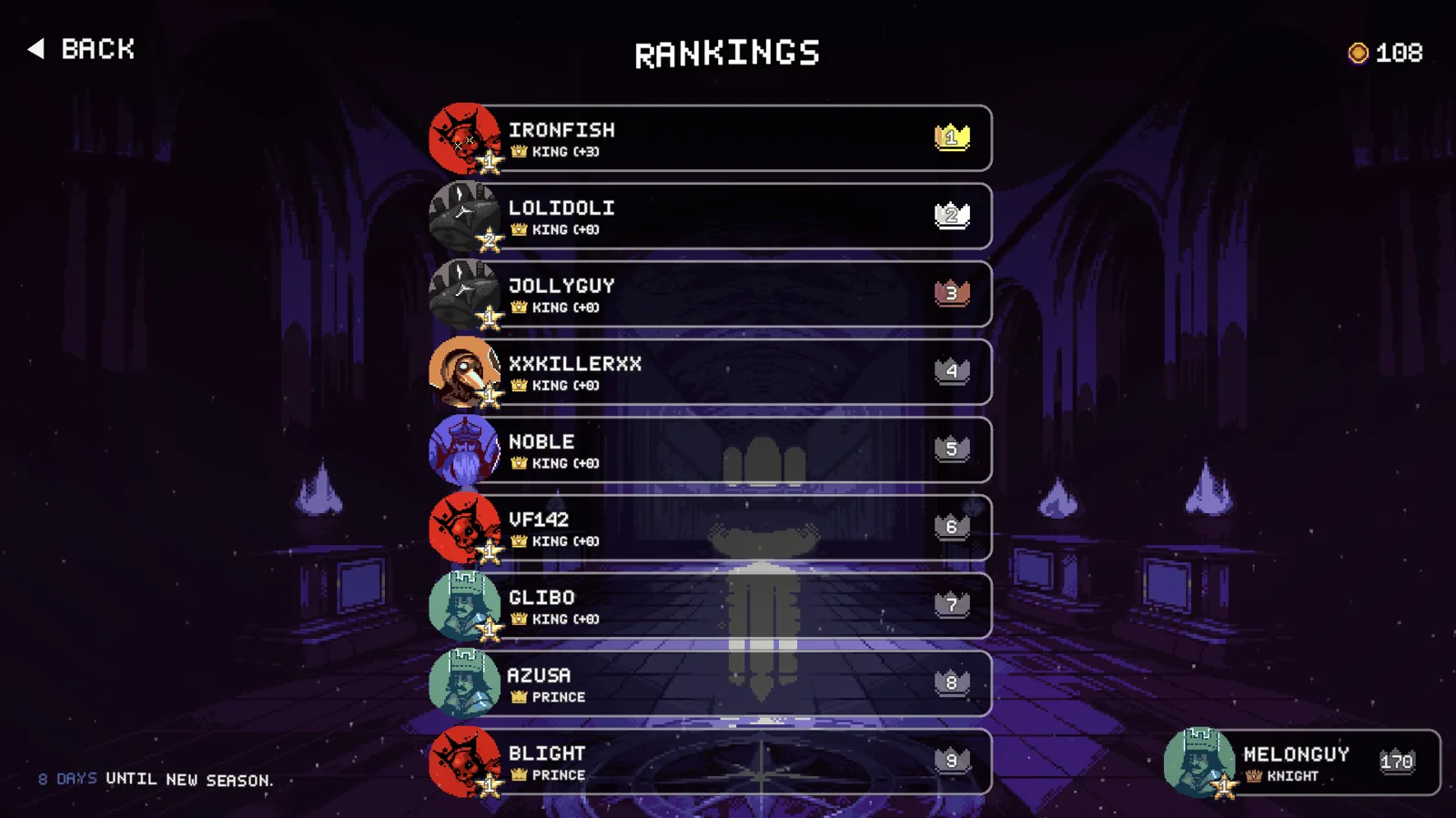
Ranking interface illustration; Patch #31 adds gameplay statistics to the current ranking screen.
Separate placement from progression
Competitive runs award ranking progress according to performance, while medals support cosmetic customization. Daily missions provide additional motivation and medal rewards. Read the specific mission rather than assuming that every cosmetic goal requires the same placement or kingdom.
There are nine ranks in the multiplayer structure. Higher competition means stronger player kingdoms can appear in the pool you face. A strategy that performs adequately at one rank is not automatically a solution to the next rank, especially if it leaves a predictable weakness in the early game.
When a run ends, record one useful change for the next attempt: a better opening troop, a reserved support plot, or a perk that strengthens the actual damage source. Then recheck the current season and start fresh. That loop makes each result a concrete piece of information while preserving the freedom to play at your own pace.